Plastic waste chokes our oceans and landfills. Traditional packaging stacks many materials together, which makes recycling hard and expensive. Mono-material packaging offers a simpler way. It uses just one type of material, so recyclers can process it without tricky sorting. This cuts down contamination and raises recycling rates. What if your packaging could be recycled as easily as one sheet of paper? This article explains how this new method helps beauty brands, looks at good material choices, and tackles real-world problems. Find out how making your packaging simpler can support a circular economy and shrink your environmental footprint.
Key Takeaways
- Mono-material packaging uses just one kind of plastic, which makes recycling simpler and cuts down on waste.
- Choose PP for jars and PE for flexible pouches to make recycling easier and follow EU rules.
- Test your product with mono-material packaging to make sure it keeps your formula safe.
- Work with certified suppliers to make sure your packaging can really be recycled.
- Begin with a small test project to see the benefits before making it bigger.
What makes mono-material packaging more sustainable for beauty brands?
Mono-material packaging uses a single polymer, such as PP, PE, or PET, to simplify packaging structures and support more sustainable cosmetic packaging. Compared with multi-material formats, it can reduce material incompatibility and make recycling more practical.
Simplified material structures can support easier recycling
Mono-material bottles, tubes, and pouches use a single polymer type across key components, reducing the need to separate different materials during recycling. To improve compatibility with recycling streams, brands should consider resin selection, labels, adhesives, and decorative finishes during packaging design.
Mono-material designs can support circular packaging goals
Mono-material packaging can support material recovery, while post-consumer recycled (PCR) plastics incorporate recovered materials into new packaging. Combining recyclable designs with PCR content can help brands reduce reliance on virgin plastics and advance circular packaging strategies, subject to material performance and local recycling capabilities.
Sustainable packaging choices can strengthen brand strategies
Choosing sustainable cosmetic packaging helps brands align environmental commitments with product requirements and market expectations. Formula compatibility, dispensing performance, appearance, and verified environmental claims should all inform packaging decisions. Through its OEM and ODM services, GIDEA PAC supports customized material selection, color matching, and component design to help brands meet their packaging and branding needs.
Which materials support sustainable mono-material packaging?
Two main plastic types are used for eco-friendly beauty packaging: polypropylene (PP) and polyethylene (PE). Each one works best for different package styles, but both help make recycling easier. Making and recycling these materials uses less energy than mixed-material options. This efficiency supports high-value recycling loops, such as bottle-to-bottle systems, and helps brands comply with regulations like EU 2025/40. GIDEA aligns its sustainability standards with these requirements, offering mono-material options across its product portfolio.
Mono-PP packaging for recyclable cosmetic jars and components
Polypropylene is rigid and offers good chemical resistance, making it suitable for cosmetic jars, lids, and closures. Using PP across compatible components can simplify packaging design and improve compatibility with PP recycling streams where available.
Mono-PP packaging can also incorporate post-consumer recycled (PCR) content. However, brands should evaluate formula compatibility, barrier requirements, and dispensing mechanisms. Pumps, metal springs, labels, and coatings may introduce other materials, so the complete package must be assessed before making recyclability claims.
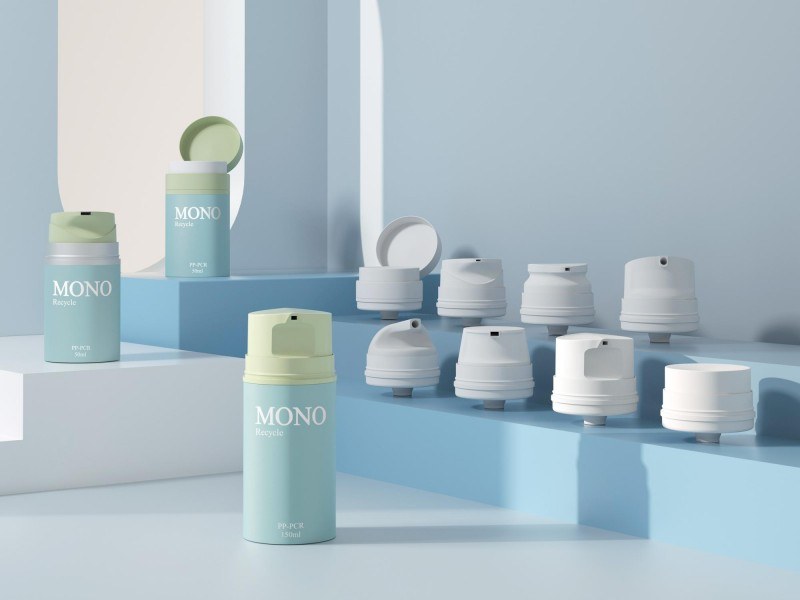
GIDEA PAC offers mono-PP packaging options for beauty and personal care applications, including sticks and roll-on formats.
Mono-PE packaging for flexible beauty and personal care formats
Polyethylene offers flexibility and durability, making mono-PE suitable for cosmetic pouches and selected tube designs. These formats can accommodate lotions, cleansers, shower gels, and other liquid or semi-liquid products.
Compared with mixed-material structures, mono-PE designs can simplify material recovery. Brands should still assess sealing performance, leakage resistance, product compatibility, and the impact of labels or barrier layers on recyclability.
GIDEA PAC offers mono-PE pouch solutions and PE-based packaging options for brands seeking flexible packaging formats.
Mono-PET packaging for transparent cosmetic containers
PET is valued for its clarity and strength, making it suitable for transparent cosmetic bottles and jars that showcase product color and texture. It can also be combined with recycled PET (rPET) to incorporate post-consumer recycled content into packaging.
When selecting mono-PET packaging, brands should consider chemical compatibility, product protection, and the compatibility of closures and other components with the intended recycling stream. Transparent designs may also require careful selection of colors, labels, and finishes.
GIDEA PAC offers PET packaging options for beauty products, allowing brands to evaluate material performance, visual presentation, and recycled-content requirements during packaging development.
Where can beauty brands use mono-material packaging?
Beauty brands can use mono-material packaging in almost every product type. Skincare, haircare, and personal care items all work well with single-resin designs. GIDEA, a top sustainable cosmetic packaging maker since 2003, offers bottles, jars, airless systems, and stick packaging in mono-material choices.
Mono-material bottles and jars for skincare and haircare
Bottles and jars are the easiest place to start. A shampoo bottle made fully from PET or PP fits right into current recycling systems. The same goes for lotion jars, cream pots, and serum bottles. When the cap, body, and inner tray all use the same resin, shoppers can recycle the whole package without taking it apart.
GIDEA supplies custom mono-material cosmetic bottles and jars for skincare and haircare brands. Their production includes both standard and refillable designs. Brands can pick PCR content, bio-based resins, or virgin mono-materials based on their sustainability targets. This flexibility lets each brand balance cost, performance, and environmental impact.
Suppliers must check their certifications to confirm real sustainability. Important credentials include:
- APR / RecyClass: Checks that PET and PP mono-material tubes and bottles can be recycled
- Ecocert/COSMOS: Confirms packaging meets low-impact standards, including recycled content
- ISO 14001: Shows the supplier runs a proper environmental management system
- Cradle to Cradle: Certifies circular design and material safety for fully recyclable products
- FSC: Ensures paper labels and outer cartons come from responsible forests
- OK Compost HOME/Industrial: Certifies that compostable mono-material films break down safely
GIDEA holds ISO 14001 certification and follows EU 2025/40 rules, REACH, and other global standards. These credentials give brands confidence when picking a packaging partner.
Mono-material airless packaging for beauty product protection
Airless packaging keeps sensitive formulas safe from air and germs. Regular airless pumps use metal springs and several plastic types. Mono-material airless systems rebuild these parts with one resin, usually PP or PE. This design keeps product protection while making the whole package recyclable.
GIDEA offers mono-material airless packaging for serums, creams, and active-rich formulas. These systems fit products that need exact dosing and longer shelf life. Brands can request custom colors, finishes, and decoration methods that keep recyclability intact. The company’s full-service approach covers structural design, material innovation, and production.
Mono-material tubes and pumps for everyday cosmetic products
Mono-material tubes are suitable for sunscreen, hand cream, cleansers, and other everyday personal care products. Mono-PE and mono-PP designs can reduce material complexity, provided the tube body, cap, and other components are compatible with the intended recycling stream.
For products requiring controlled dispensing, brands can also explore compatible mono-material pump systems. GIDEA PAC supports customized packaging development, allowing brands to assess material choices, dispensing functions, and design requirements for different cosmetic applications.
How can brands balance sustainability with packaging performance?
Sustainable cosmetic packaging must meet environmental goals without compromising product safety, shelf life, or user experience. Mono-material packaging can simplify material structures, but brands need to evaluate each design against the formula, functional requirements, and available recycling systems.
Product compatibility remains essential for sustainable packaging
Different cosmetic formulas interact with packaging materials differently. Oils, fragrances, and active ingredients may affect material stability, while unsuitable containers can lead to leakage or changes in product quality.
Brands should conduct compatibility testing before mass production, including checks for deformation, leakage, and formula stability.
Barrier performance helps protect cosmetic formulas effectively
Oxygen, moisture, and light can affect cosmetic quality and shelf life. Mono-material packaging must provide sufficient protection for the specific formulation, although its barrier performance may differ from that of conventional multilayer structures.
Brands should compare oxygen transmission rate (OTR) and water vapor transmission rate (WVTR) data where relevant, alongside stability and shelf-life test results. Barrier coatings or specialized structures may improve protection, but their impact on recyclability must also be assessed.
Component design can support both function and recyclability
Closures, pumps, liners, springs, labels, and decorative finishes can introduce materials that complicate recycling. Designing compatible components can help maintain dispensing performance while reducing unnecessary material combinations.
For example, brands can evaluate mono-material closures, simplified pump mechanisms, and compatible labels.
Packaging choices should match the target recycling system
Recyclability depends not only on packaging design but also on local collection, sorting, and processing infrastructure. A package accepted in one market may not be recyclable through household collection in another.
Before selecting a mono-material solution, brands should check local recycling guidelines, material identification, component compatibility, and relevant design-for-recycling criteria. Testing and documented evidence can help substantiate environmental claims while ensuring packaging meets target-market requirements.
Our mono-material packaging solutions for beauty brands
GIDEA PAC offers mono-material cosmetic packaging for skincare, makeup, and personal care, including bottles, jars, tubes, pouches, airless containers, and sticks. Available materials include PP, PE, and PET to meet different product and design requirements.
Cosmetic bottles and jars designed for sustainable packaging needs
GIDEA PAC provides mono-material bottles and jars in pump, dropper, and roll-on formats for serums, lotions, creams, and deodorants. Custom sizes, colors, and compatible components help brands align packaging with product specifications and recycling goals.
Airless and stick packaging for different beauty applications
Mono-material airless packaging supports controlled dispensing and helps limit direct air exposure. Stick formats suit lip balms, deodorants, sunscreens, and solid cosmetics. Refillable options are also available for brands exploring packaging systems that reduce single-use waste.
Custom packaging development supported by in-house R&D
GIDEA PAC provides OEM and ODM services, supported by an in-house R&D team of more than 20 engineers. Services include material selection, structural design, mold development, and packaging compatibility testing, with customization based on brand and product requirements.
Sustainable material options for broader packaging strategies
Beyond mono-material designs, GIDEA PAC offers PCR plastics, ocean-bound plastic (OBP), bio-based materials, and refillable packaging options. Brands can assess PP-PCR, PE-PCR, and rPET according to formula compatibility, appearance, performance, and recycled-content targets.
Frequently asked questions about mono-material packaging
What is mono-material packaging for cosmetic products?
Mono-material packaging uses primarily one type of plastic across key components, such as the container body, closure, and liner. Examples include mono-PP cosmetic sticks, mono-PE pouches, and single-material bottles and jars. The goal is to simplify packaging structures and support recyclability.
How does mono-material packaging support sustainability?
Mono-material cosmetic packaging can reduce material complexity and simplify recycling in compatible systems. Brands can also combine it with post-consumer recycled (PCR) plastic to reduce reliance on virgin materials. These approaches address different sustainability goals and can be used together when product requirements allow.
Is mono-material packaging always fully recyclable?
No. Recyclability depends on the specific resin, component compatibility, labels, adhesives, coatings, and local recycling infrastructure. Brands should evaluate the complete packaging design and verify its compatibility with the intended recycling stream before making environmental claims.
Which materials are commonly used in mono-material packaging?
The main options are polypropylene (PP), polyethylene (PE), and polyethylene terephthalate (PET). PP is commonly used for jars and closures, PE for flexible tubes and pouches, and PET for transparent bottles and containers. The final choice depends on the packaging format and product requirements.
Can mono-material packaging protect cosmetic formulations?
Yes, when the material and packaging structure are properly selected for the formula. Brands should assess chemical compatibility, barrier performance, sealing, and dispensing requirements to help maintain product quality throughout its intended shelf life. GIDEA PAC offers customized mono-material packaging development based on product specifications and brand needs.