
Sustainable Materials
Gidea provides a comprehensive range of eco-friendly packaging materials that help brands reduce their environmental footprint while maintaining premium quality and performance. From post-consumer recycled plastics to ocean-bound recovery, bio-based alternatives, and natural bamboo — find the right material solution for your sustainability goals.
Material pathways
Recycled content range
Lower CO2 vs virgin
Packaging categories
- Material Pathways
Choose Your Sustainable Material
Six core material families, each with distinct sustainability benefits, performance characteristics, and compliance profiles.
Whether your brand targets circularity, carbon reduction, or natural aesthetics, there is a pathway that fits.
- 01 / RECYCLED CONTENT
PCR Plastic (Post-Consumer Recycled)
The most widely recognized sustainability standard
PCR (Post-Consumer Recycled) plastic is made from plastic waste collected from end-consumers — primarily used beverage bottles, caps, and containers. The collected items are sorted, ground, washed, dried, and pelletized into high-quality recycled resin that can replace virgin plastic in packaging production. PCR is currently one of the most widely recognized sustainability standards, supporting the circular economy while reducing landfill waste and virgin plastic demand.
- Reduces virgin plastic usage by 30-100%
- Up to 70% lower carbon footprint vs virgin plastic
- Compatible with existing molds and manufacturing processes
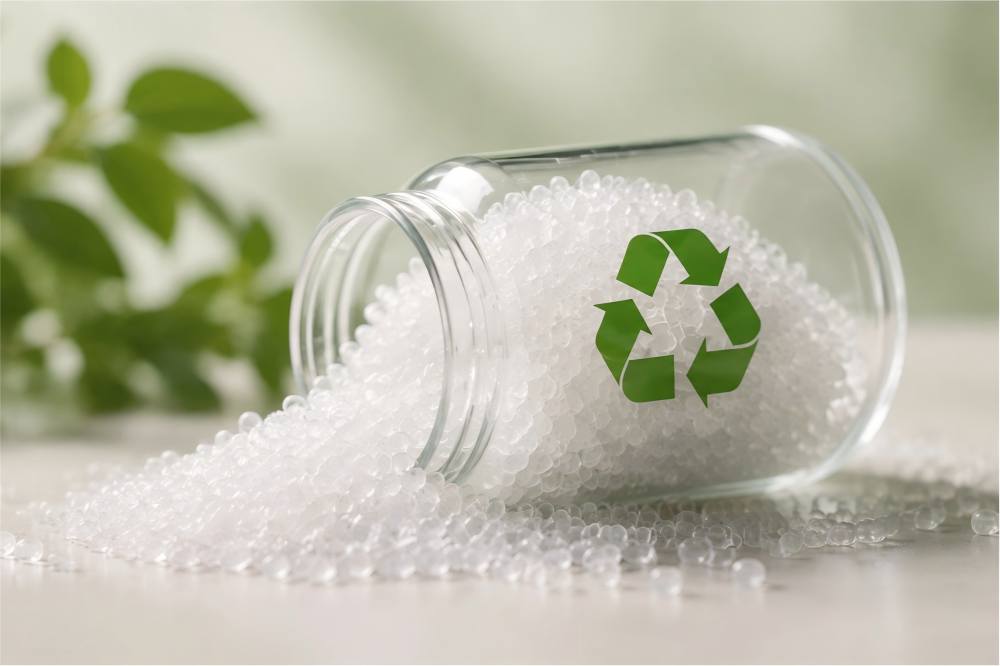
PCR plastic pellets / sample
Technical details & process
Key benefits
- Reduces virgin plastic usage by 30-100%
- Up to 70% lower carbon footprint vs virgin plastic
- Compatible with existing molds and manufacturing processes
- Accepted by most recycling systems worldwide
- Supports brand ESG and sustainability disclosure
Design considerations
- Batch-to-batch color variation (especially in transparent packaging)
- Surface finish may appear slightly less glossy than virgin
- Requires clear PCR percentage declaration for compliance
- 100% PCR has higher variation; 50% PCR is practical ceiling for color-critical SKUs
- Request color tolerance specs (ΔE) from supplier
How PCR is produced
- 02 / OCEAN RECOVERY
OBP (Ocean-Bound Plastic)
Capturing plastic before it reaches the ocean
Ocean-Bound Plastic (OBP) is abandoned plastic waste collected within 50 km of coastlines where waste management infrastructure is absent or inefficient. By intercepting this plastic before it enters the ocean, OBP packaging directly prevents marine pollution while supporting coastal communities through fair-wage collection programs. Each OBP package is equivalent to removing 3-4 plastic bags from the ocean.
- Directly prevents ocean plastic pollution
- Supports coastal communities with fair wages
- OceanCycle certified supply chain
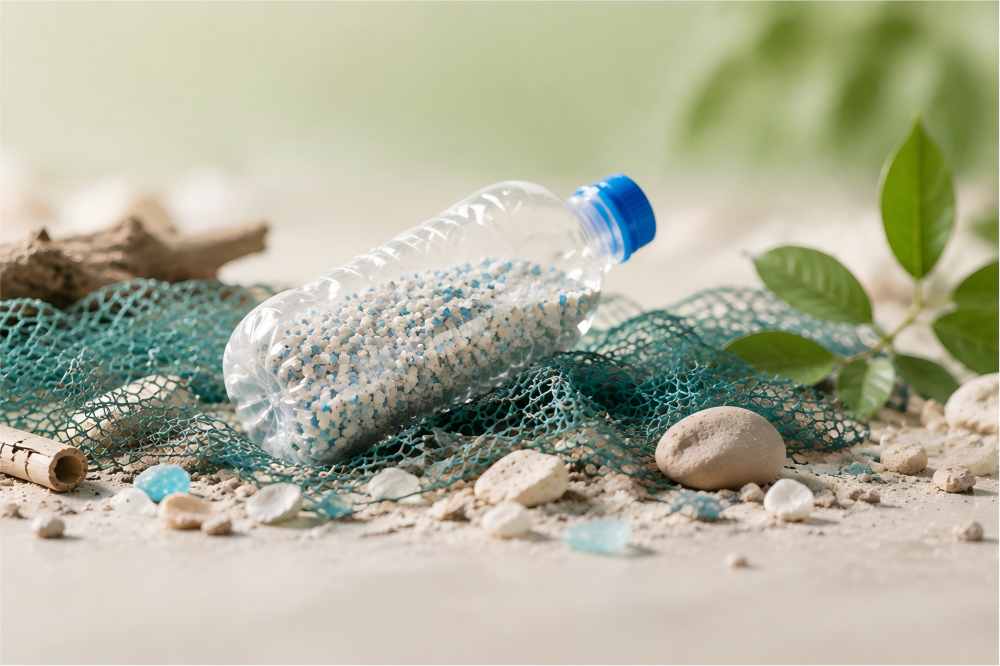
Ocean-bound plastic collection
Technical details & process
Key benefits
- Directly prevents ocean plastic pollution
- Supports coastal communities with fair wages
- OceanCycle certified supply chain
- Strong brand storytelling and consumer appeal
- Available in PET, PP, HDPE, and LDPE
Collection & processing
- Collected from islands, beaches, coastlines, and unregulated landfills
- Sorted by social enterprises (PET, PP, HDPE, LDPE separated)
- Cleaned and compressed into bales
- Upcycled via mechanical process (no virgin plastic added)
- Compounded to meet specific product requirements
From waste to product
- 03 / RECYCLED CONTENT
rPET Packaging (Recycled PET)
High clarity, food-safe, fully recyclable
Recycled PET (rPET) is produced from recycled polyethylene terephthalate, commonly sourced from used beverage bottles and food containers. rPET retains the clarity, strength, and barrier properties of virgin PET while dramatically reducing energy consumption and CO2 emissions in production. It is FDA-approved for food contact and fully recyclable, making it ideal for premium cosmetic bottles and jars that require transparency.
- FDA-approved for food and cosmetic contact
- High clarity and gloss comparable to virgin PET
- 100% recyclable in standard PET streams
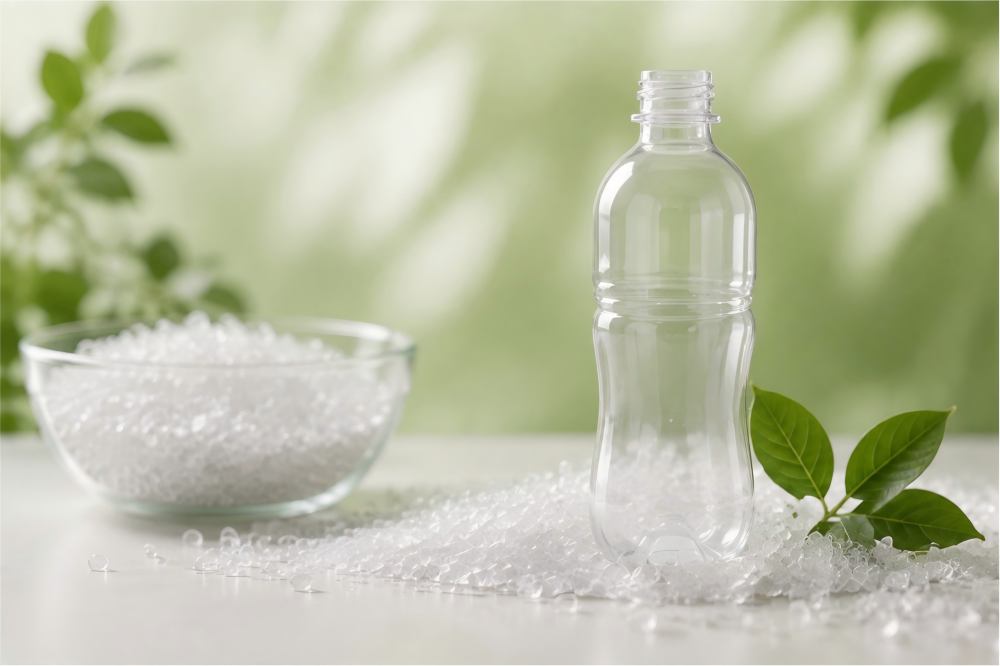
rPET clear bottle / jar sample
Technical details
Key benefits
- FDA-approved for food and cosmetic contact
- High clarity and gloss comparable to virgin PET
- 70% lower energy consumption vs virgin PET production
- 100% recyclable in standard PET streams
- Excellent barrier properties for sensitive formulations
Design considerations
- Ideal for transparent and semi-transparent packaging
- Available in 25%, 50%, and 100% rPET blends
- Higher rPET content = slight gray/blue undertone
- Compatible with standard PET molds and tooling
- Meets EU PPWR recycled content requirements
- 04 / RENEWABLE
Bio-based Materials
Derived from renewable plant resources
Bio-based packaging materials are derived from renewable biological resources such as sugarcane, corn starch, and cellulose. These materials reduce dependence on fossil fuels, offer a strong sustainability narrative, and some variants are industrially compostable. Bio-PE (sugarcane-derived) is a drop-in replacement for standard HDPE/LDPE with identical processing and recyclability, while PLA (corn starch-derived) is compostable under industrial conditions (ISO 14855).
- Derived from renewable plant sources (sugarcane, corn)
- Reduced fossil fuel dependency and carbon emissions
- Bio-PE: drop-in replacement, same recyclability as HDPE
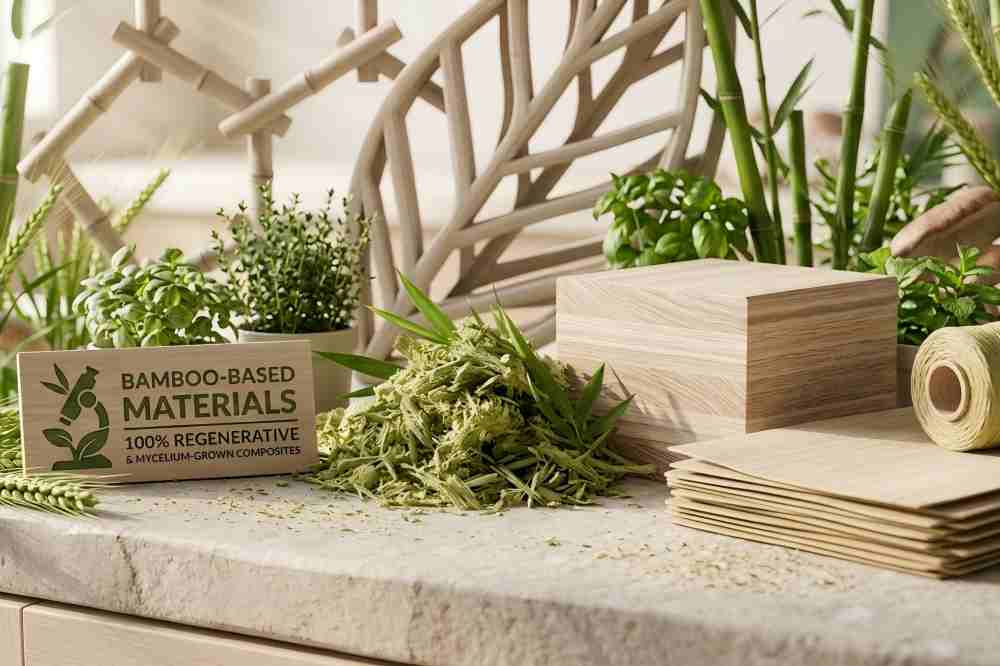
Bio-based material / plant source
Technical details
Key benefits
- Derived from renewable plant sources (sugarcane, corn)
- Reduced fossil fuel dependency and carbon emissions
- Bio-PE: drop-in replacement, same recyclability as HDPE
- PLA: industrially compostable (EN 13432 / ISO 14855)
- Strong consumer storytelling and sustainability positioning
Design considerations
- PLA requires industrial composting — not backyard compostable
- PLA is NOT recyclable in standard PET streams (contamination risk)
- Avoid labeling PLA as "recyclable" — FTC Green Guides compliance
- Higher MOQ and cost compared to conventional plastics
- Best for tubes, airless pumps, and flexible containers
- 05 / NATURAL
Bamboo Components
Fast-growing, renewable, and biodegradable
Bamboo is one of the fastest-growing plants on Earth, with some species growing up to 35 inches in a single day. Unlike hardwood, bamboo reaches maturity in just 3-5 years without pesticides, irrigation, or replanting. Bamboo packaging offers a natural, tactile aesthetic that reduces plastic usage while contributing to lower greenhouse gas emissions, habitat preservation, and water pollution reduction.
- Renewable: matures in 3-5 years vs decades for hardwood
- Naturally biodegradable at end-of-life
- Requires no pesticides or irrigation
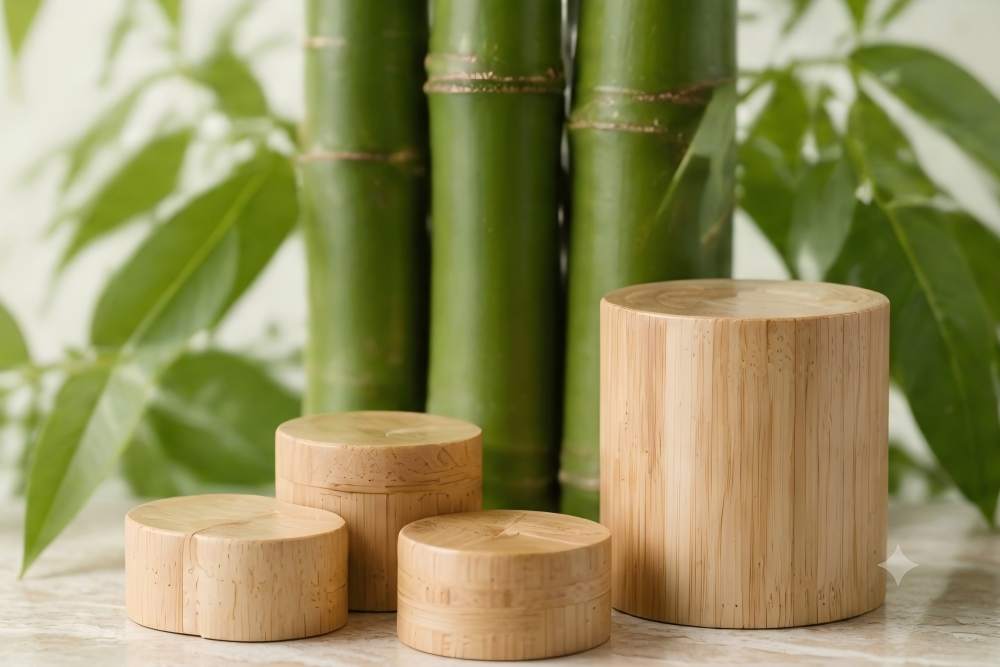
Bamboo packaging component
Technical details & applications
Key benefits
- Renewable: matures in 3-5 years vs decades for hardwood
- Naturally biodegradable at end-of-life
- Releases 35% more oxygen than equivalent trees
- Requires no pesticides or irrigation
- Natural, premium tactile aesthetic
Applications
- Jars for creams, balms, and face masks
- Tubes for lip balm, lotion, and sunscreen
- Bottles for shampoo, conditioner, and body wash
- Caps and lids for glass or plastic containers
- Beauty tools: makeup brushes and applicators
- 06 / RECYCLABILITY
Recyclable Plastics
Engineered for the recycling bin
Our recyclable plastic options are engineered to be fully compatible with existing recycling streams. By using mono-material structures and avoiding problematic additives, heavy colorants, and multi-layer laminates, we ensure that packaging can be effectively sorted, processed, and re-enter the recycling system without contamination. Every design is tested against RecyClass and APR Design Guide protocols.
- Fully compatible with curbside recycling streams
- Mono-material construction (no multi-layer separation needed)
- Tested against RecyClass and APR Design Guide
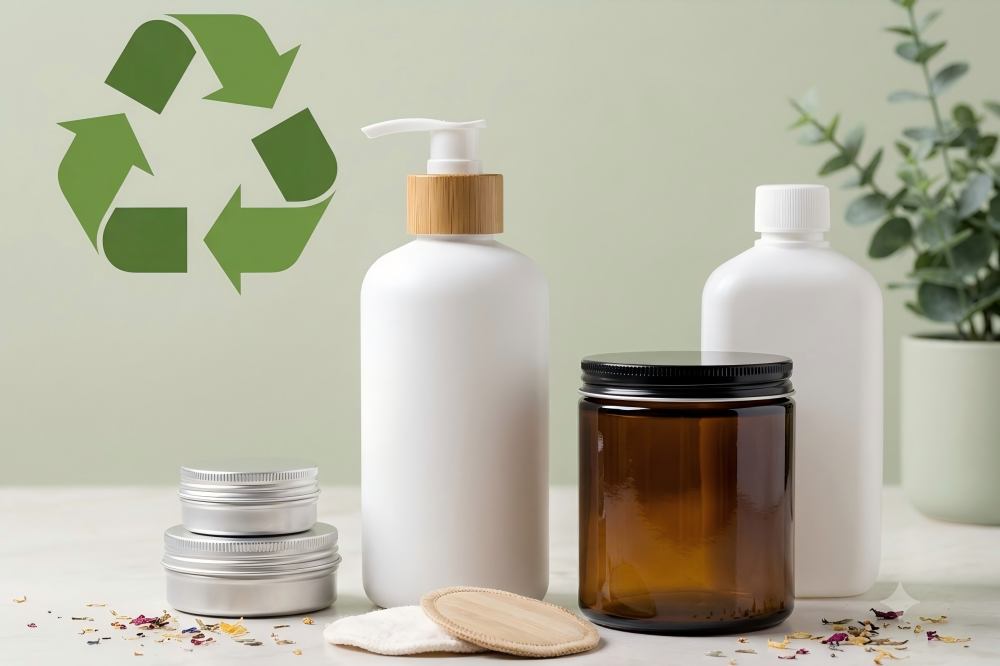
Mono-material recyclable packaging
Technical details
Key benefits
- Fully compatible with curbside recycling streams
- Mono-material construction (no multi-layer separation needed)
- No problematic additives or heavy metal colorants
- How2Recycle label-ready
- Tested against RecyClass and APR Design Guide
Material options
- PP (polypropylene): jars, closures, airless bottles
- PE (polyethylene): tubes, squeeze bottles, caps
- PET (polyethylene terephthalate): bottles, jars
- Compatible closures and pump systems available
- Sortable color and density design
- Decision Support
Material Comparison at a Glance
Compare all six material pathways across key sustainability
and performance dimensions to find the best fit for your brand.
| Material | Recycled content | Recyclable? | Biodegradable? | Carbon reduction | Best for | Cost premium |
|---|---|---|---|---|---|---|
| Pcr plastic | 30-100% | Yes | NO | Up to 70% | Bottles, jars, tubes, closures | +5-40% |
| Obp (ocean-bound) | 30-100% | Yes | NO | Up to 70% | Bottles, jars, tubes (ocean story) | +10-40% |
| Rpet | 25-100% | Yes | NO | Up to 70% | Transparent bottles, jars | +5-25% |
| Bio-based (bio-pe) | 0% (renewable) | Yes | NO | Up to 80% | Tubes, airless pumps, flexible | +15-30% |
| Bio-based (pla) | 0% (renewable) | NO | Industrial only | Up to 75% | Folding cartons, inserts | +20-40% |
| Bamboo | 0% (natural) | Yes (compost) | Yes | Up to 60% | Jars, caps, beauty tools | +10-25% |
| Recyclable plastics | 0% (virgin) | Yes | NO | Baseline | All categories (mono-material) | Minimal |
- Quality & Compliance
Certifications & Testing
Every sustainable material we offer is backed by third-party testing and internationally recognized certifications.
Test reports and documentation are available upon request.
TUV / SGS
Third-party quality testing for recycled materials, including MSDS reports

OceanCycle
Certified supply chain for ocean-bound plastic sourcing and traceability
RecyClass
European recyclability evaluation and certification for plastic packaging
APR Design Guide
US recyclability protocol compliance for sortable packaging design
FDA / EFSA
Food-contact compliance for US and EU markets (rPET, Bio-PE)
EN 13432
European compostability standard for bio-based and PLA materials
ISO 14001
Environmental management system certification
FSC Certified
Forest Stewardship Council certification for bamboo and paper components
- Common Questions
Frequently Asked Questions
What sustainable materials do you offer?
We offer a wide range of sustainable materials for cosmetic packaging, including PCR plastics, rPET, bio-based plastics, recyclable plastics, and Ocean Bound Plastic (OBP) to help brands achieve their sustainability goals.
Which packaging products are available with PCR materials?
PCR materials can be applied to most of our cosmetic packaging solutions, including bottles, jars, tubes, airless containers, closures, dispensers, and other standard packaging components.
What PCR content do you offer?
We provide PCR content ranging from 30% to 100%, depending on product requirements. For applications requiring consistent color and appearance, 50% PCR is often the recommended balance between sustainability and aesthetics.
Are PCR and bio-based materials as reliable as virgin plastics?
Yes. Our sustainable materials undergo the same performance, compatibility, and quality testing as virgin plastics to ensure reliable functionality and consistent product quality. Certifications are available upon request.
Are bio-based plastics recyclable?
It depends on the material. Bio-PE is recyclable through conventional PE recycling systems, while PLA is designed for industrial composting and should be processed in certified industrial composting facilities where available.
How do I choose the right sustainable material?
Our engineering team will recommend the most suitable material based on your packaging application, sustainability objectives, product compatibility, brand requirements, and target market regulations.