Will Your Packaging Pass?
Packaging regulations are tightening fast — and non-compliant products face market exclusion. We help you understand what’s coming, what it means for your products, and how to stay ahead of every deadline.
- Aug 2026 deadline: EU PPWR takes effect — heavy metal and PFAS limits become enforceable. If you sell in the EU, your packaging must comply by this date.
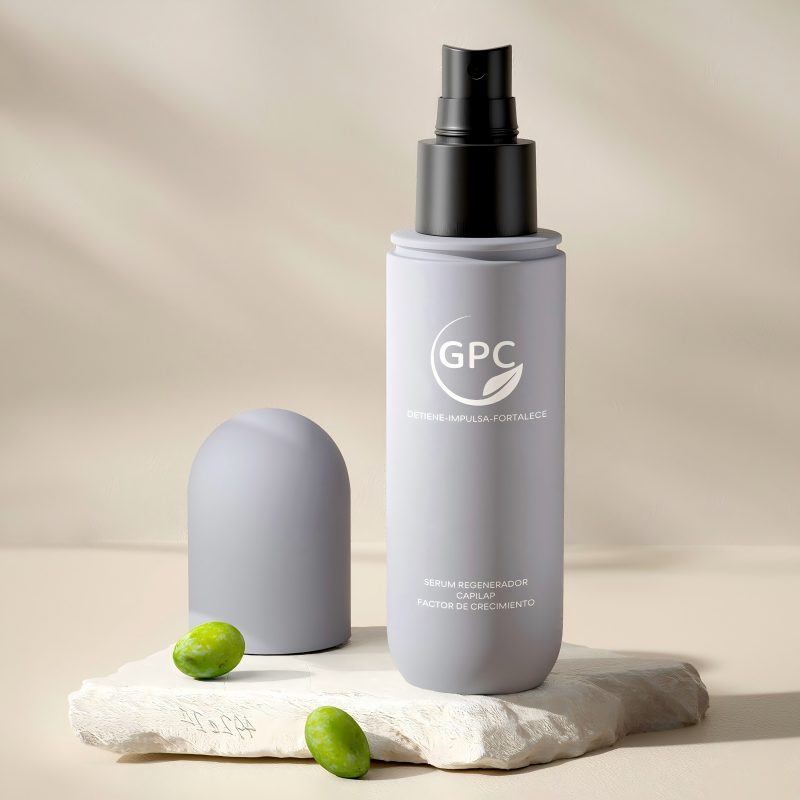
Every product tested before market entry
- Key Dates
What's Coming & When
The regulatory timeline below shows the deadlines that will impact your packaging decisions.
Most require advance planning — start preparing at least 12 months ahead.
EU PPWR applies
Heavy metals & PFAS limits enforced
All packaging sold in the EU must meet strict substance limits. Supply chain documentation required.
CA SB 343
California truth-in-labeling law
Cannot use chasing-arrows symbol on packaging unless it's genuinely recyclable in California.
EU mandates begin
Recyclability & PCR content mandates
Two separate rules begin. All packaging must reach Class C recyclability (≥70% by weight).
PCR minimums apply by packaging type — for example 30% for PET contact-sensitive, 10% for other plastics.
EU final stage
Only Class A & B packaging allowed
Packaging with ≥85% recyclability required. Class C and D no longer permitted in the EU market.
- your market
What Each Market Requires
Selecting the right packaging means knowing what your target markets demand.
Here’s a clear breakdown of what matters most in each region.
European Union
PPWR (EU 2025/40)
The most comprehensive packaging regulation globally. Affects recyclability design, recycled content, substance limits, and packaging minimization.
- Recyclability: Class C by 2030, A/B by 2038
- PCR content: 10-35% by 2030, up to 65% by 2040
- National EPR: France Triman, Germany VerpackG, Spain color codes
United States
CA SB 343 / AB 793
California leads US regulation. SB 343 restricts recycling symbols; AB 793 mandates recycled content in beverage containers, expanding to cosmetics.
- Recycling labels: No chasing arrows unless genuinely recyclable
- PCR content: 25-50% for beverage containers by 2030
- PFAS ban: ≤100ppm total organic fluorine
United Kingdom
Plastic Packaging Tax
A direct financial incentive: packaging with <30% recycled content is taxed at £217.85 per tonne. Drives strong demand for PCR materials.
- Tax threshold: ≥30% PCR = tax exempt
- Applies to: All plastic packaging manufactured or imported
- Documentation: GRS or ISCC Plus certification required
China
GB 9685 / GB 4806
Food-contact material standards regulate additives, migration limits, and material-specific requirements. Mandatory for all products sold in China.
- GB 9685: Additive positive list compliance
- GB 4806.7: Plastic migration testing required
- Labeling: Material identification marks required
- your rating
What Grade Will Your Packaging Get?
Under the EU PPWR, every packaging design is graded A through D based on how recyclable it actually is.
This grade determines whether your product can be sold in the EU.
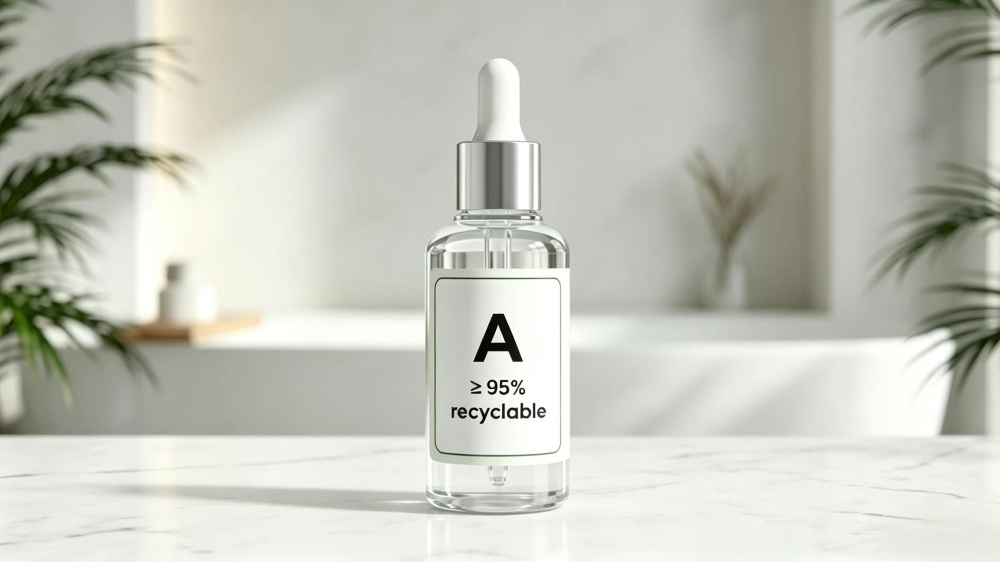
≥ 95% recyclable
Required by 2038
Preferred design
Mono-material PET bottle
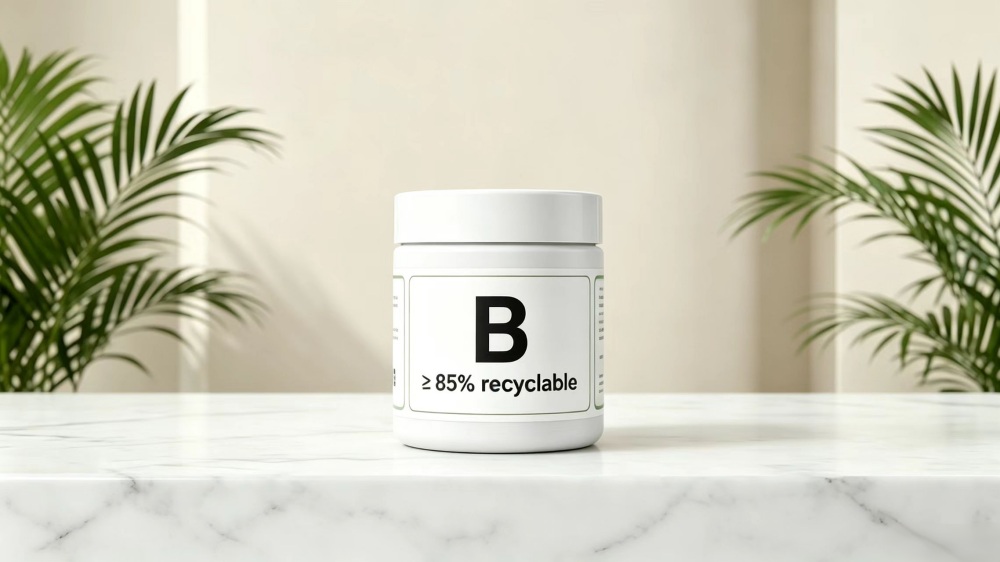
≥ 85% recyclable
Accepted after 2038
Minor adjustments
PE jar + wash-off label
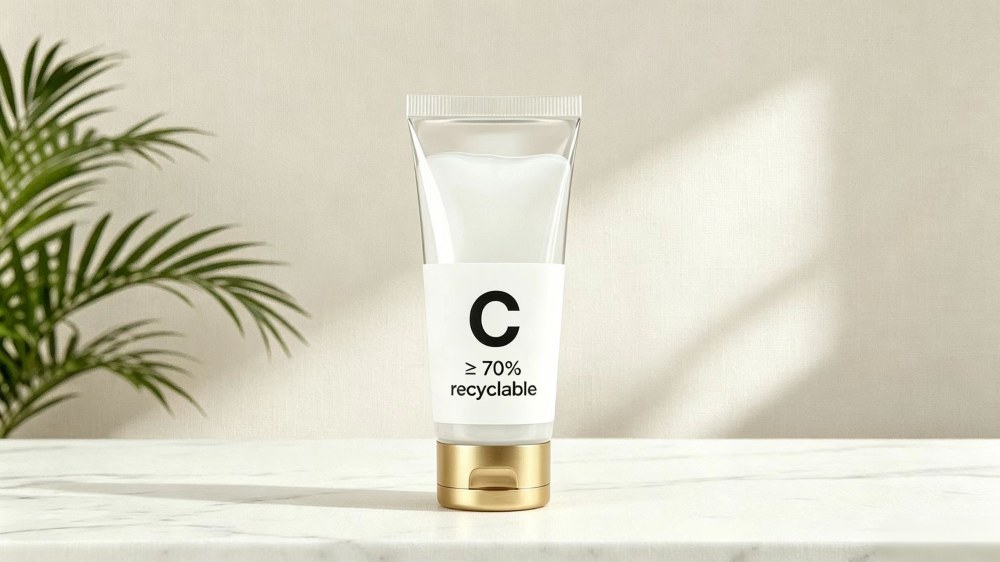
≥ 70% recyclable
Minimum from 2030
Phasing out
Tube with metal cap
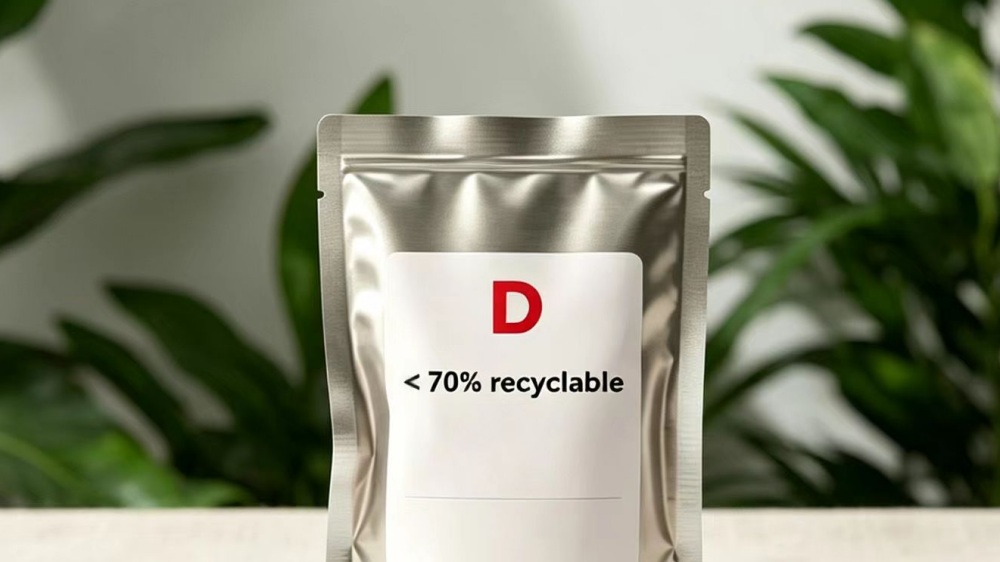
< 70% recyclable
Banned after 2030
Redesign required
Multi-layer laminate
- How we help: We design packaging to achieve Class A or B from the start. Mono-material construction, NIR-sortable colorants, and wash-off labels are standard in our design process. Every new mold is pre-assessed against RecyClass criteria before production.
- Our support
What You Get From Us
We don’t just tell you what’s required — we provide the documentation, testing,
and ongoing support to keep your products compliant across all your markets.
Compliance Documentation
Full documentation package for every product, ready for market submission.
- EU Declaration of Conformity
- GRS / ISCC Plus recycled content certificate
- Material safety data sheets (SDS)
- RecyClass recyclability assessment report
- Chain-of-custody documentation
Testing & Certification
Third-party lab testing through accredited partners for all compliance requirements.
- Substance testing (SGS, TÜV, Intertek)
- Recyclability pre-assessment (RecyClass)
- PCR content verification
- Migration testing per EU 10/2011
- PFAS testing (LC-MS/MS, 2ppb detection)
Compliance Audit & Advisory
From initial assessment to ongoing regulatory tracking — we keep you ahead.
- Current portfolio gap analysis
- Multi-market compliance roadmap
- Design optimization for target rating
- Regulatory deadline alerts
- Annual compliance status review
- Common Questions
Frequently Asked Questions
My packaging is currently Class D. What do I need to do?
Redesign before January 2030. From that date, Class D packaging (less than 70% recyclable by weight) can no longer be placed on the EU market. We recommend starting the redesign at least 18 months ahead so there is time for testing, sample approval, and mold changes. Typical redesign moves: switch to mono-material structures (PP, PE, or PET), remove multi-layer laminates and PVC, use NIR-sortable colorants, and replace problematic adhesives. We provide a full redesign roadmap with RecyClass pre-assessment to confirm your new rating before production.
Can you handle compliance for multiple markets at once?
Yes. We cover EU PPWR + national EPR (France, Germany, Spain, Italy), US (FDA, California SB 343, AB 793), UK Plastic Tax, China GB standards, Japan, and Korea. We provide a unified compliance roadmap so your packaging meets all target markets simultaneously — no need for separate vendors.
What documentation do I receive with each order?
Every order includes: EU Declaration of Conformity, GRS/ISCC Plus recycled content certificate, material safety data sheets, RecyClass assessment report, and chain-of-custody documentation. For multi-market orders, we add region-specific compliance documents (e.g., Triman artwork for France, Green Dot registration for Germany).
How do you verify recycled content claims?
We use GRS 4.0 (Global Recycled Standard) or ISCC Plus certification for chain-of-custody verification. This includes supplier audits, mass-balance accounting, and third-party verification of PCR percentage. Full documentation is provided for your EU Declaration of Conformity and EPR reporting.