Balancing Sustainability and Manufacturability
Over the past decade, the cosmetics packaging industry has undergone a quiet but profound transformation. Sustainability is no longer a bonus item on the marketing checklist — it has become the first principle of product development. As an upstream packaging supplier, we must confront one core question head-on: can biodegradable materials really be run on large-scale production lines as stably, efficiently, and repeatably as conventional plastics?
In this second round of systematic sampling, we using Sulapac Luxe Flex, a bio-based composite from the Finnish materials company Sulapac. The entire sampling process was completed at GIDEA’s own injection molding workshop — from mold assembly and material drying to parameter tuning, everything was led by our own process engineering team. This is a key step in demonstrating to our customers that biodegradable materials can be produced under our full control. Following the first trial on an ABS mold, this round we switched to a PP mold — a switch that sounds simple, but in practice multiplied the demanding processing-window requirements of biodegradable materials. This article is a complete retrospective of our ABS-to-PP process comparison, the pitfalls we hit, the final parameter balance point we found, and everything we have learned about this material.
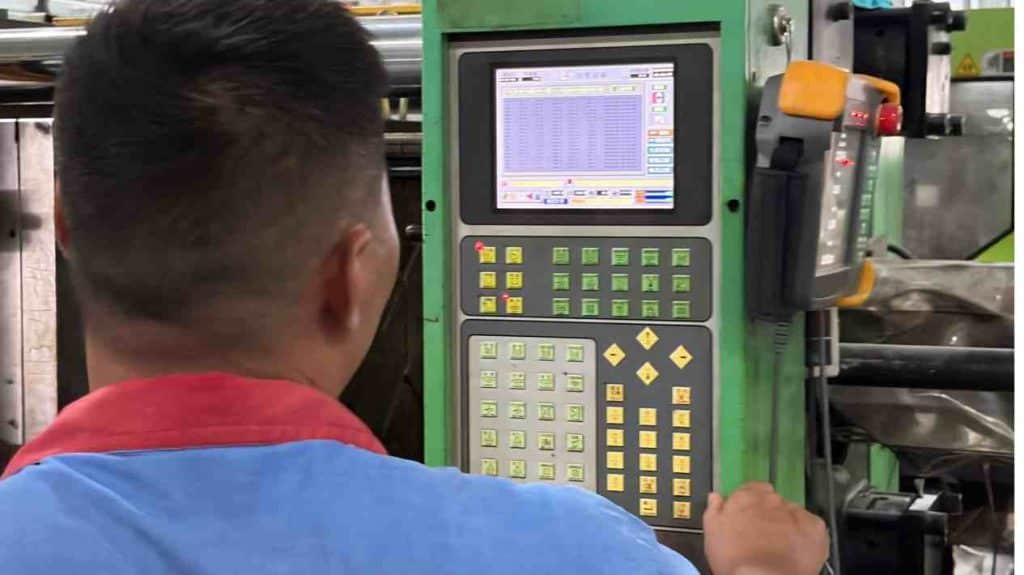
Figure 1. The PP mold in the clamped state on a vertical injection molding machine
Sulapac Luxe Flex: A Bio-Based Composite with a “Ceramic-Like” Feel
Sulapac is a sustainable materials company based in Helsinki, Finland. Its Luxe Flex series is an injection-molding-grade bio-based composite designed to replace rigid petroleum-based plastics (ABS, PC, PS), primarily used in premium packaging such as perfume caps, cosmetic jars, lipstick components, and makeup palettes.
Core Positioning and Certifications
· Bio-based content: 73–86% (USDA Certified Biobased Product label)
· Industrial composting: TÜV Austria OK Compost Industrial certified
· Food contact compliance: meets EU 10/2011 and US FDA standards
· Marine biodegradation: 77% biodegradation within 420 days under simulated marine conditions (ASTM D6691, 30°C/86°F)
· Chemical recycling: can be hydrolyzed back to monomers via LOOPLA technology
· PFAS-free (verified by an ISO/IEC 17025 accredited laboratory)
This portfolio of certifications means Luxe Flex is sustainable not just at the end-of-life stage — its entire life cycle, from feedstock and production to use and disposal, carries quantifiable environmental value. Unlike ordinary PLA, which relies solely on industrial composting as its “end-of-pipe degradation” strategy, Luxe Flex combines three sustainability attributes at once: bio-based origin, compostability, and chemical recyclability.
Technical Data Sheet (TDS) in Detail
The data below comes from the official Sulapac Technical Data Sheet (TDS Version 1.5, updated December 2025, grades IM1024.0NC / IM1024.0BP). These parameters are the baseline reference for process development, but in actual production they must be adjusted according to mold structure, machine condition, and local temperature and humidity.
Physical and Mechanical Properties
| Parameter | Test Standard | Unit | Typical Value |
| Density | ISO 1183 | g/cm³ | 1.27 |
| Hardness | ISO 868 | Shore D | 89 |
| Shrinkage | — | % | 0.36 |
| Tensile strength (yield) | ISO 527-1 | MPa | 53 |
| Tensile modulus | ISO 527-1 | GPa | 2.3 |
| Elongation at break | ISO 527-1 | % | 30 |
| Flexural strength | ISO 178 | MPa | 83 |
| Flexural modulus | ISO 178 | GPa | 2.5 |
| Charpy impact (unnotched) | ISO 179-1 | kJ/m² | 19 |
| Charpy impact (notched) | ISO 179-1 | kJ/m² | 1.6 |
| MFI (190°C/2.16 kg) | ISO 1133 | g/10min | 31 |
| Heat deflection temp. HDT-B | ISO 75 | °C | 53 |
| Bio-based content | ASTM D6866 | % | 86 |
Several key signals stand out from the data. The density of 1.27 g/cm³ is higher than ABS at 1.04 g/cm³, meaning a cap of the same size feels more substantial in the hand — exactly the “premium feel” that high-end cosmetics pursue. Shrinkage is only 0.36%, far below the 0.5–0.7% of PP/ABS, which is very favorable for precision thread forming. However, the notched impact strength of only 1.6 kJ/m² indicates the material is on the brittle side — a fact that directly shaped our thinking on mold structure and demolding system design.
From ABS to PP: Why Switching Molds Is a Process Re-Engineering Exercise
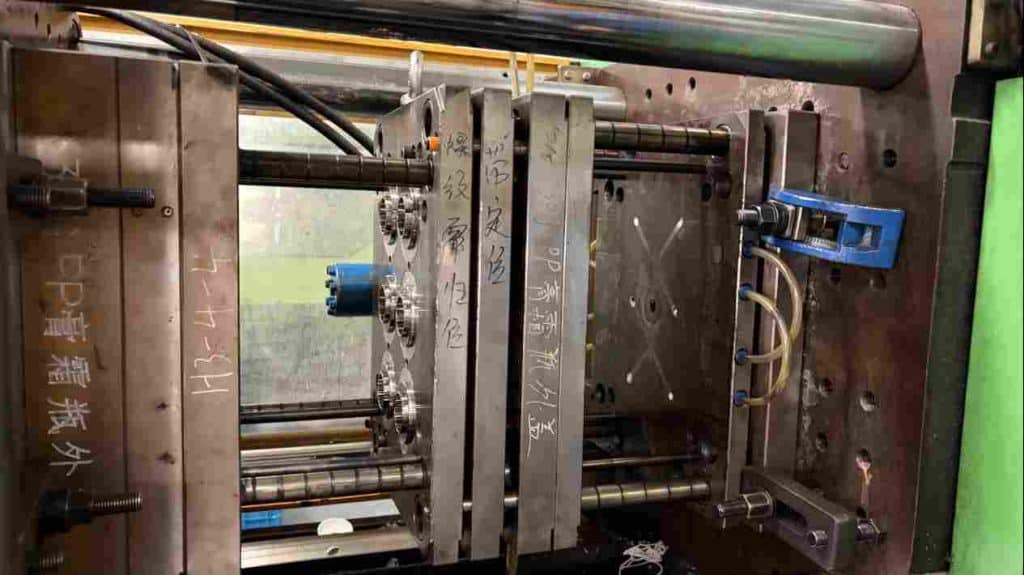
Figure 2. The previous ABS-mold trial setup (handwritten notes record masterbatch color shift, glass-fiber grade, color variation, and part sticking)
Many engineers assume: “If the biodegradable material runs on an ABS mold, it should also run on a PP mold — the structures are similar.” This intuition is dangerous.
ABS and PP differ fundamentally in injection temperature, flow behavior, shear sensitivity, and thermal degradation characteristics — and Sulapac Luxe Flex, as a bio-based composite, has a much narrower processing window than conventional plastics. When you stack these three layers of difference on top of each other, “switching molds” effectively means “rebuilding the entire process from scratch.”
Problems Exposed During the ABS-Mold Trial
During the first ABS-mold trial, our engineers hand-wrote four major issues on the machine-side platen notes (see Figure 2):
· “Masterbatch color shift” — visible color patches on the part surface that clearly deviated from the masterbatch color
· “Glass-fiber grade” — the glass-filled version had insufficient flow, resulting in short shots in thin-wall sections
· “Color variation” — visible color fluctuation between batches
· “Part sticking” — difficult demolding with localized scuff marks
These problems looked like ABS-mold problems on the surface, but the root cause was the same in every case: we had directly applied ABS process parameters, while the barrel temperature ceiling of Luxe Flex (200°C) is a full 30–60°C lower than ABS (230–260°C), and its required mold temperature (20–40°C) is much lower than ABS (50–80°C). When we copied the “high mold temperature + high melt temperature” ABS recipe onto Sulapac, the material began to thermally degrade inside the barrel, flowability dropped instead of improving, and a chain reaction followed: short shots, color patches, and part sticking.
Second-Order Challenges After Switching to the PP Mold
This round we switched to a PP mold (see Figure 1), expecting the PP processing window to sit closer to Sulapac’s — and instead discovered a new set of problems:
· The PP mold has smaller runners and gates, so shear heating of the material rises faster
· The PP mold’s cooling channels were designed around PP shrinkage, but Sulapac’s shrinkage is lower, causing abnormal gripping force on the part
· Gate seal time in the PP mold differs from Sulapac; holding pressure to the PP timeline leads to over-packing and flash
· Thread-forming precision: Luxe Flex is more brittle than PP, so the unscrewing mechanism torque of the PP mold had to be recalibrated
This confirmed our initial judgment: biodegradable materials can indeed “run” on both PP and ABS molds, but the process parameters must be rediscovered for each one.
Key Process Parameters: Comparison and the Balance Point
Below is a side-by-side comparison of the process balance point we have settled on at GIDEA’s in-house factory versus the conventional parameter ranges for PP and ABS.
Barrel Temperature Profile Comparison
| Zone | PP (conv.) | ABS (conv.) | Sulapac (TDS) | Actual Setting |
| Throat | 30–50 °C | 50–80 °C | 40–60 °C | 50 °C |
| Feed section | 180–220 °C | 200–240 °C | 150–180 °C | 165 °C |
| Compression | 200–240 °C | 220–260 °C | 160–190 °C | 180 °C |
| Metering | 210–250 °C | 230–270 °C | 175–200 °C | 190 °C |
| Nozzle | 210–250 °C | 230–270 °C | 175–200 °C | 195 °C |
| Mold | 20–60 °C | 50–80 °C | 20–40 °C | 30 °C |
As the table shows, the overall processing temperature of Luxe Flex is about 30–50°C lower than PP and about 50–80°C lower than ABS, yet slightly higher than PLA (155–175°C melt temperature). This places it in the middle ground between the processing windows of “conventional plastics” and “fully biodegradable plastics” — you can neither use the high-temperature, high-pressure ABS approach nor copy the ultra-low-temperature, slow PLA approach.
Fine Control of Mold Temperature
Mold temperature is the critical parameter for biodegradable injection molding. Based on publicly available industry references and our own hands-on experience, every 10°C rise in mold temperature produces significant changes in crystallinity, dimensional stability, and surface gloss of biodegradable materials:
· PLA-type materials: glass transition temperature is only 55–60°C, so the mold must stay below 30°C — otherwise parts stick or deform at demolding
· PHA-type materials: crystallinity is extremely sensitive to mold temperature; a fluctuation of just ±2°C shows up in shrinkage, so oil tempering units (not water) are mandatory
· Sulapac Luxe Flex: the TDS recommends 20–40°C; we ultimately locked in 30°C ±2°C on the PP mold, controlled by a mold temperature controller
· When the product requires heat resistance (e.g., HDT-B 130°C), Sulapac officially recommends a mold temperature no lower than 100°C — but this production batch does not involve that requirement
Screw Speed and Back Pressure
Biodegradable materials are generally shear-sensitive, and the TDS explicitly recommends keeping back pressure within 5–10 bar — far below the 10–20 bar typically used for PP/ABS. During on-site tuning we found that above 12 bar, silver streaks and bubbles began to appear on the part surface; below 4 bar, the color masterbatch dispersed unevenly and the masterbatch color-shift problem returned. We finally stabilized back pressure at 7–8 bar.
In addition, the TDS states explicitly: “Residence time should be minimized to reduce the risk of thermal degradation.” In practice, we used a smaller-diameter screw and limited the maximum shot size to keep residence time under 90 seconds per cycle.
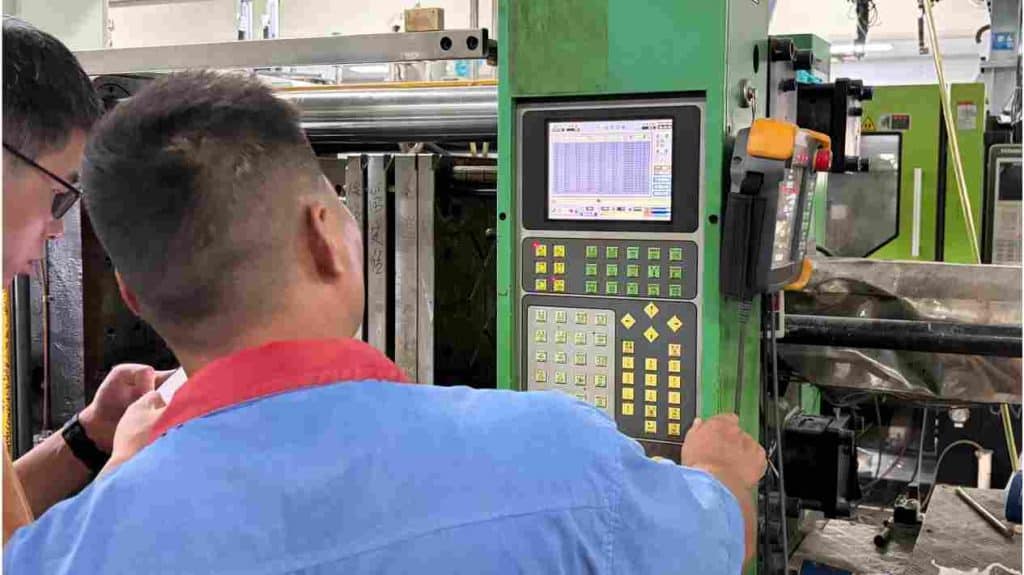
Figure 3. An engineer adjusting barrel temperature and back pressure at the machine control panel
Drying: The Overlooked First Gate
In our work with customers, we have found that many biodegradable material projects fail not in the injection molding process itself, but at the drying stage. The Luxe Flex TDS explicitly requires drying at 80°C for 5–6 hours in a dehumidifying or vacuum dryer, with residual moisture kept below 0.2%.
This is something Luxe Flex shares with PLA and PHA — bio-based materials are generally far more hygroscopic than petroleum-based plastics. If drying is inadequate, the moisture undergoes hydrolysis at barrel temperatures, directly cleaving the polymer chains. The result is yellowing, embrittlement, and a drastic drop in strength — damage that is irreversible.
This time we used a dehumidifying dryer with a -40°C dew point; each batch was dried for 6 hours and verified with an inline moisture analyzer before being fed to the machine. One special reminder: when adding color masterbatch, the masterbatch must first be cooled to 50°C before blending in, to avoid agglomeration (this is written into Sulapac’s official guidelines).
Product Showcase: From Raw Material to Finished Part
After several rounds of parameter balancing, both the appearance and the functionality of the final samples met the customer’s expectations. Below is an authentic record of the production floor and the product details.
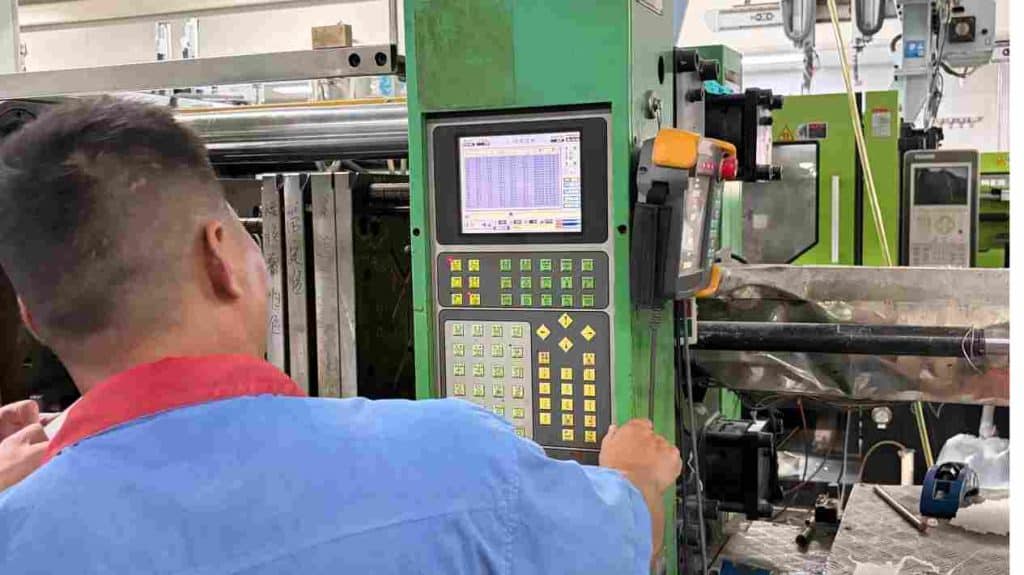
Figure 4. A successfully molded cap sample (matte surface with visible natural-particle texture)
The subtly matte finish of the cap in Figure 4 is the signature look of Sulapac Luxe Flex. The TDS states explicitly: “Depending on the mold choice, Luxe Flex can deliver both glossy and matte surface effects.” This batch used a PP mold whose cavity was given a textured (sandblasted) finish, so the final parts came out matte — a perfect match for the customer’s “natural feel” brand positioning.
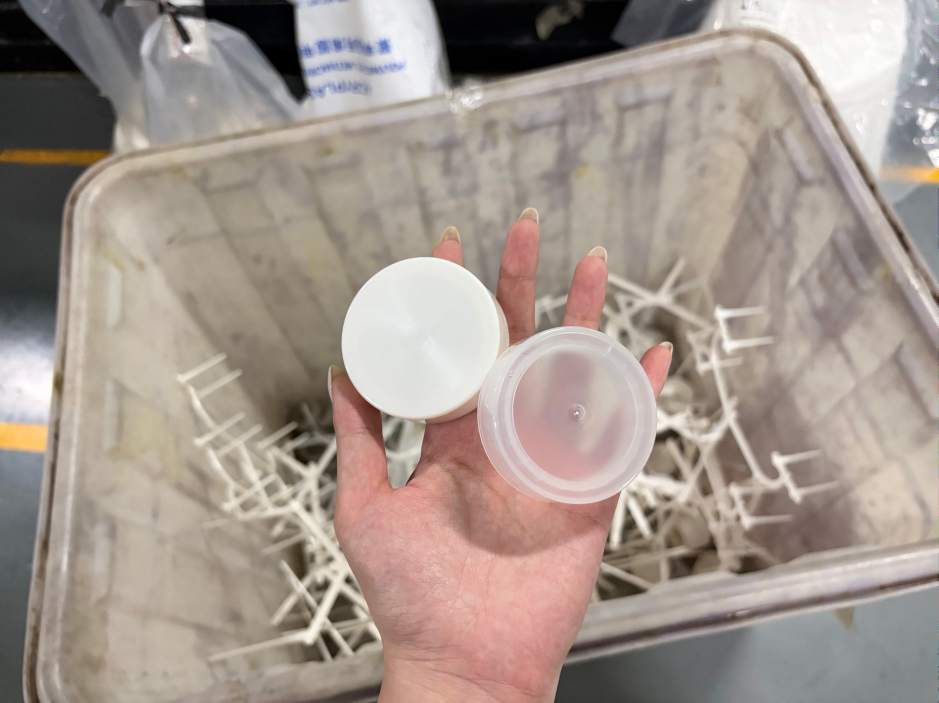
Figure 5. Multiple sample groups from the same mold under different parameter sets
Figure 5 shows samples preserved from successive tuning rounds — each box corresponds to a different set of process parameters. By comparing appearance differences — surface gloss, texture sharpness, flash, gate seal condition — we can trace our way back to the optimal processing window. This “iterative trial-and-error plus physical comparison” method is more intuitive than relying solely on DOE software simulation, and particularly well suited to biodegradable materials, whose process responses are highly non-linear.
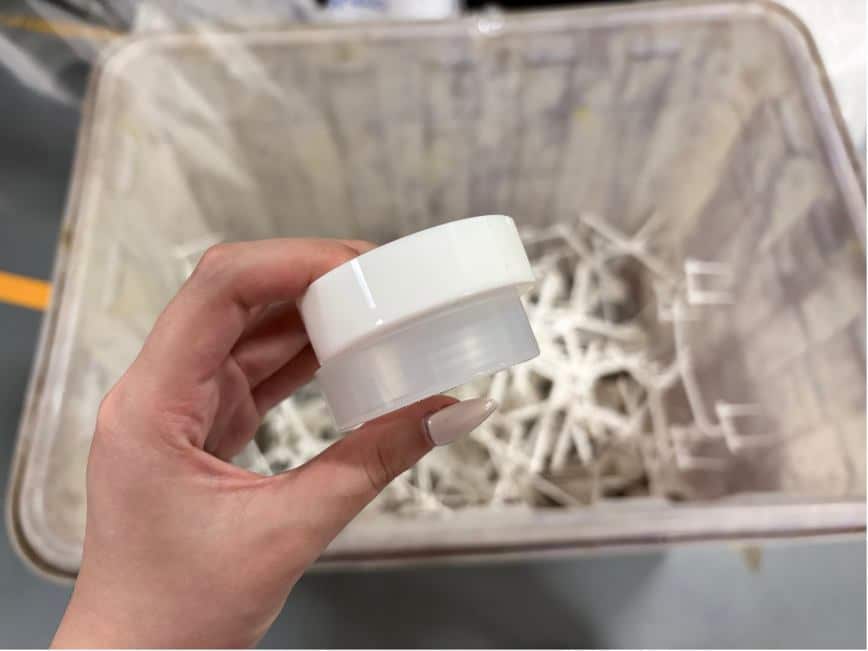
Figure 6. Thread detail on the inner wall of the cap (verifying precision thread forming)
Figure 6 shows the thread formation on the inside of the cap. Precision threads in biodegradable materials have long been an industry challenge, because their flowability is lower than ABS while their shrinkage differs from PP. Luxe Flex’s low 0.36% shrinkage turned out to be the advantage here — the finished threads fit the bottle body well and passed the torque test. This performance exceeded our initial expectations.
Benchmarking Against Comparable Biodegradable Materials
To help build a more complete frame of reference, here is a horizontal comparison of Sulapac Luxe Flex against the mainstream families of biodegradable injection-molding materials currently on the market:
| Dimension | PP (petro) | ABS (petro) | PLA | PHA | Sulapac Luxe Flex |
| Bio-based content | 0% | 0% | 100% | 100% | 73–86% |
| Melt temp. range | 190–250°C | 220–260°C | 155–175°C | 160–180°C | 150–200°C |
| Mold temperature | 20–60°C | 50–80°C | 15–30°C | 35–60°C ±2°C | 20–40°C |
| Drying requirement | Optional | Optional | 4–6h @ 80°C | 2–4h @ 100°C | 5–6h @ 80°C |
| HDT heat deflection | 90–110°C | 85–100°C | 55–60°C | 120–140°C | 53°C |
| Notched impact | 5–10 kJ/m² | 10–20 kJ/m² | 0.5 kJ/m² | 1–3 kJ/m² | 1.6 kJ/m² |
| Shrinkage | 1.0–2.5% | 0.4–0.7% | 0.3–0.5% | 0.5–0.7% | 0.36% |
| Industrial compost | No | No | Yes | Yes | Yes (OK Compost) |
| Marine biodeg. | No | No | No | Yes | Partial (77%/420d) |
| Carbon footprint | 1.85 kg CO₂eq/kg | ~3.5 kg CO₂eq/kg | 1.2–2.0 kg CO₂eq/kg | 2.0–4.0 kg CO₂eq/kg | ~0.57 kg CO₂eq/kg |
As the table shows, the melt temperature range of Luxe Flex covers the middle ground between PP and PLA, which means better equipment compatibility — you neither have to bring the barrel temperatures of an ABS setup all the way down as you would for PLA, nor deal with the dimensional instability that PHA’s crystallinity fluctuations cause. At the same time, its shrinkage (0.36%) is the lowest of all compared materials — very friendly to precision molding.
But its weaknesses are equally clear: an HDT of only 53°C means the product cannot be used for hot filling or high-temperature environments. This is why Sulapac officially advises that if a customer needs the heat-resistant HDT-B 130°C version, the mold temperature must be raised above 100°C — an additional cost item.
The Pits We Fell Into: Six Lessons from the Front Line
This is the section we most want to share — these lessons appear in no official TDS; we paid for them with several tons of scrap.
Lesson 1: Applying ABS process parameters to biodegradable materials is the biggest trap
Many customers fail their first trial simply by copying over the “high mold temperature + high melt temperature” ABS recipe. The material starts degrading inside the barrel, flowability drops, everything looks “tuned” — but the parts never come out right. The correct approach is to start from zero, begin at the midpoint of the TDS recommended range, and change only one parameter at a time.
Lesson 2: Back pressure above 12 bar is a quality red line
Biodegradable materials are extremely sensitive to shear degradation. Our own measurements: raising back pressure from 8 bar to 15 bar cut the notched Charpy impact strength of the part by 40%. The 5–10 bar range in the TDS is not a suggestion — it is a hard-won limit.
Lesson 3: Color masterbatch must use a bio-based carrier
Do not use ordinary PE/PP-carrier masterbatches — within the processing window they will not melt properly, causing “color patches” and “masterbatch color shift.” The TDS explicitly recommends masterbatches with bio-based carriers such as PLA, PHA, PBAT, or PBS. This was the root cause of the “masterbatch color shift” problem in the previous ABS-mold trial.
Lesson 4: Purge with PP or PE before every material change
The TDS spells out purge instructions: purge with PP or PE before and after production runs. This rule is easily overlooked — residual ABS or POM trapped in dead corners of the barrel gets reheated repeatedly, carbonizes, forms black specks, and keeps contaminating subsequent batches.
Lesson 5: Any stoppage over 30 minutes requires emptying the barrel
The longer biodegradable material sits in the barrel, the worse the degradation. Our rule: if the machine stops for more than 30 minutes, the barrel must be emptied of remaining material and reloaded at the next startup. This matters enormously in multi-shift production plants.
Lesson 6: Temperature controller precision matters more than its type
Even a water-based temperature controller is fine, as long as its control accuracy reaches ±2°C — that satisfies Luxe Flex. Conversely, an expensive oil-based unit with only ±5°C accuracy will still cause problems, even on PHA. The key investment is not the medium — it is the precision of the PID control algorithm.
Conclusion: Not a Drop-in Replacement — a New Process Category
After this round of PP-mold sampling, we have formed three core judgments about Sulapac Luxe Flex and bio-based composites of this class:
First, they can indeed “run” on both PP and ABS molds — but the process parameters must be rediscovered each time. Copying a conventional-plastic process package over wholesale is the most common cause of project failure.
Second, the heart of the process balance point is the coordinated control of three variables: temperature, residence time, and shear. Any one of them drifting out of the window triggers a chain reaction. This demands that engineers have a clear cause-and-effect understanding of every parameter, rather than blindly nudging “rule-of-thumb” values.
Third, the switch from the ABS mold to the PP mold made us understand more deeply: biodegradable materials are not a “substitute” for petroleum-based plastics — they are a process category that deserves independent study. They have their own physical laws, their own processing philosophy, and their own equipment requirements. When we treat them with that respect, they reward us with products that combine beauty, function, and sustainability.
In the next phase, we plan to codify the process parameters from this sampling run into our internal database, and — at the next PP-mold mass production run — introduce three modules in parallel: inline moisture monitoring, real-time mold temperature logging, and AI-assisted parameter recommendation, upgrading our process tuning from “experience-driven” to “data-driven” standardized production.
Appendix: References and Data Sources
1. Sulapac Ltd. Technical Data Sheet – Sulapac Luxe / Luxe Flex Materials, Version 1.5, 08.12.2025 (IM1024.0NC / IM1024.0BP)
2. Sulapac official product page: https://www.sulapac.com/materials-injection-molding/
3. Weiyada Technology: Injection Molding Guide for Biodegradable Plastics (PLA, PHA, etc.)
4. Imtec Mould: Integrating Bio-based Polymers into Existing Mold Designs (2026 carbon-standard compliance guide)
5. CoreL Mould: 5 Bioplastics Ready for Production in 2026
6. Zetar Mold: Bio-Based Plastics for Injection Molding – Selection & Properties
7. Moulding Injection: Bioplastic injection moulding – technical constraints, materials and real applications
8. ASTM D6866 (bio-based content), EN 13432 (industrial composting), ASTM D6691 (marine biodegradation)